Food as Medicine: Why Medically Tailored Meals Are the New Prescription
Food as Medicine: Why Medically Tailored Meals Are the New Prescription
What if part of your next prescription came from the kitchen?
For decades, healthcare has relied heavily on medications, procedures and medical devices to manage chronic disease. These treatments can be essential and lifesaving—but another therapeutic tool is increasingly being brought into the healthcare conversation:
Food.
The emerging Food as Medicine movement aims to integrate evidence-based nutrition more directly into healthcare. One of its most structured approaches is the medically tailored meal (MTM): prepared meals designed around an individual's medical and nutritional requirements.
Unlike a generic healthy eating plan, medically tailored meals are typically prescribed or provided following healthcare referral and designed by appropriately qualified nutrition professionals to account for a person's diagnosis, symptoms, allergies and other dietary needs.
What Are Medically Tailored Meals?
A medically tailored meal is much more than a pre-packaged "healthy meal."
These meals are specifically designed to fit an individual's medical and nutritional requirements. According to the US Office of Disease Prevention and Health Promotion, medically tailored meals are fully prepared meals generally intended for people with complex health conditions and are tailored by a registered dietitian nutritionist as part of a treatment plan.
The wider Food as Medicine spectrum can include:
Medically tailored meals – complete prepared meals designed around medical needs.
Medically tailored groceries – selected foods appropriate for an individual's condition.
Produce prescriptions – programs designed to increase access to fruit and vegetables.
Nutrition and culinary education – helping patients turn nutritional recommendations into practical meals.
Personalised nutritional strategies – dietary recommendations informed by an individual's metabolic health, lifestyle, medications and clinical circumstances.
The key concept is simple:
Instead of giving everyone the same diet, nutrition can be matched to the person.
From Standard Diet to Precision Nutrition

The Personalised Nutrition Pathway
Health Assessment
↓
Blood glucose • lipids • body composition • blood pressure • symptoms
↓
Metabolic & Nutritional Assessment
↓
Protein • fibre • micronutrients • energy requirements • food tolerance
↓
Personalised Food Strategy
↓
Vegetables • quality protein • healthy fats • whole-food carbohydrates • targeted nutrients
↓
Monitoring & Adjustment
↓
Metabolic health • weight • muscle • glucose • cardiovascular markers • wellbeing
This is where Food as Medicine begins to overlap with integrative, functional and precision medicine.
Why Food Has Such a Powerful Effect on Human Biology
Food isn't simply calories.
Every meal delivers thousands of biologically active compounds—including amino acids, fatty acids, vitamins, minerals, polyphenols and fibre—that interact with metabolic pathways throughout the body.
Nutrition can influence:
Blood glucose regulation
Carbohydrate quality, fibre, meal composition and total energy intake influence post-meal glucose and insulin responses.
Inflammatory signalling
Dietary patterns can influence pathways associated with oxidative stress and inflammatory signalling.
The gut microbiome
Dietary fibre and plant compounds provide substrates for intestinal microbes, which can produce metabolites such as short-chain fatty acids.
Mitochondrial metabolism
Carbohydrates, fats and amino acids ultimately supply substrates used in cellular energy production.
Muscle metabolism
Adequate dietary protein combined with resistance exercise supports muscle protein synthesis and preservation of lean tissue.
Cardiovascular health
Dietary patterns can influence blood pressure, lipid profiles, body weight and other cardiovascular risk factors.
Food therefore represents a continuous stream of biological information arriving several times every day.
FOOD → BIOLOGY → HEALTH
Whole foods
↓
Fibre • protein • healthy fats • micronutrients • polyphenols
↓
Gut + Liver + Muscle + Adipose Tissue
↓
Glucose regulation • satiety • microbial metabolites • energy metabolism
↓
Metabolic Health
This does not mean food can replace necessary medical treatment. Rather, appropriate nutrition may become one component of a broader treatment strategy.
Why Medically Tailored Meals Are Different From a Standard "Healthy Diet"
Someone with insulin resistance may require a different nutritional strategy from someone struggling with unintentional weight loss.
A person with kidney disease may have different dietary requirements from someone with cardiovascular disease.
Someone undergoing cancer treatment may experience appetite changes, nausea, altered taste, gastrointestinal symptoms or increased nutritional requirements.
That is precisely why the word tailored matters.
The Food Is Medicine Coalition describes MTMs as meals designed around the medical needs of people living with severe, complex or chronic illness, with meal plans developed following nutritional assessment.
Personalisation may consider factors such as:
Medical condition + medications + allergies/intolerances + nutritional status + metabolic health + body composition + lifestyle + food accessibility + individual goals.
Which Conditions Could Benefit From Food-as-Medicine Strategies?
Food-based interventions are being investigated or implemented across numerous diet-sensitive conditions, including:
Type 2 Diabetes and Insulin Resistance
Meal composition can influence postprandial glucose excursions, total energy intake and diet quality.
A randomised crossover trial involving adults with type 2 diabetes and food insecurity evaluated medically tailored meal delivery and reported improvements in dietary quality and food security during the intervention.
Cardiovascular Disease
Nutrition strategies may target dietary fibre, sodium, saturated fat, unsaturated fats, fruit and vegetable intake, and overall dietary pattern.
Obesity and Metabolic Dysfunction
A personalised eating strategy may complement exercise, behavioural interventions and, where clinically appropriate, pharmacological weight-management treatments.
Frailty and Age-Related Muscle Loss
For older adults, "eat less" can sometimes be exactly the wrong message.
Maintaining adequate protein, micronutrients and total energy, combined with appropriate physical activity, becomes increasingly important for protecting muscle and functional independence.
Cancer and Complex Chronic Illness
Nutrition can be particularly important when disease or its treatment affects appetite, weight, digestion and the ability to prepare meals.
However, nutritional intervention in complex illness should complement—not replace—appropriate specialist medical treatment.

DIABETES
→ glucose-aware meal composition
CARDIOVASCULAR RISK
→ fibre-rich whole foods + appropriate fat and sodium intake
HEALTHY AGEING
→ adequate protein + micronutrient density
METABOLIC HEALTH
→ energy balance + fibre + protein + minimally processed foods
COMPLEX ILLNESS
→ nutrition adapted to symptoms, treatment and clinical requirements
The appropriate strategy depends on the individual.
Can Medically Tailored Meals Reduce Hospitalisations and Healthcare Costs?
This is one of the most interesting areas of Food as Medicine research.
A 2024 Journal of the American College of Cardiology state-of-the-art review reported that observational and quasi-experimental evidence has associated medically tailored meals with reductions in emergency department visits, hospital admissions and medical spending. A meta-analysis discussed in the review found MTM programs were associated with approximately 19.7% lower annual healthcare expenditures and 47% fewer annual hospitalisations.
Those figures are encouraging—but they need to be interpreted carefully.
Association does not always establish causation, and Food as Medicine research is still developing.
In fact, an important 2024 randomised clinical trial involving 465 adults with type 2 diabetes and food insecurity found that an intensive Food as Medicine program improved diet-related behaviours and engagement with preventive healthcare, but did not produce a statistically significant improvement in HbA1c compared with usual care.
That distinction is important.
Food as Medicine is promising—but it isn't magic.
The strongest approach is to treat nutrition as a serious component of healthcare while continuing to demand rigorous clinical evidence.
From Calories to Cellular Medicine
Modern nutritional medicine is increasingly interested not only in how many calories a person consumes but also in the biological effects of those calories.
Consider two meals containing a similar amount of energy.
One may contain predominantly refined carbohydrates and ultra-processed ingredients.
Another may contain:
🥦 colourful vegetables
🥑 healthy fats
🐟 quality protein
🫐 polyphenol-rich berries
🫘 legumes and fermentable fibre
🥜 nuts and seeds
Their calorie values could be similar while their effects on satiety, glucose response, fibre intake, micronutrient intake and overall dietary quality can be very different.
Nutrition influences an interconnected metabolic network:
Food
↓
Glucose • fatty acids • amino acids • micronutrients
↓
Metabolic signalling
↓
Insulin • AMPK • mTOR and other nutrient-sensing pathways
↓
Cellular responses
↓
Energy production • protein synthesis • metabolic adaptation
These pathways are complex, and individual foods should not be marketed as simplistic "switches" for longevity pathways.
Instead, long-term dietary patterns, energy balance, physical activity, sleep and overall metabolic health work together.
The Gut Microbiome Adds Another Layer
One of the most exciting areas in nutritional research involves the trillions of microorganisms living within the gastrointestinal tract.
Dietary fibre reaches the colon, where certain microorganisms can ferment it and produce compounds including short-chain fatty acids (SCFAs).
These microbial metabolites can interact with intestinal and metabolic physiology.
THE FOOD–MICROBIOME CONNECTION
Fibre-rich foods
↓
Gut microbiota
↓
Fermentation
↓
Short-chain fatty acids
↓
Interactions with gut barrier, immune and metabolic signalling
This is another reason nutritional medicine is moving beyond the simple concept of counting calories.
Could Food Become Part of a Longevity Prescription?
Potentially—but longevity nutrition requires balance.
A healthy ageing strategy may aim to support:
metabolic flexibility
healthy body composition
preservation of skeletal muscle
cardiovascular health
adequate micronutrient status
gut health
insulin sensitivity
physical function
sustainable body weight
The objective should not simply be maximum calorie restriction or eliminating entire food groups.
For many adults—particularly as they age—preserving muscle mass and nutritional adequacy may be just as important as reducing excess body fat.
That is why personalised assessment matters.
Food as Medicine Does Not Mean Food Instead of Medicine
This is perhaps the most important distinction.
Food as Medicine should not become "Food Instead of Medicine."
Someone with diabetes may still require glucose-lowering medication.
Someone with hypertension may still require antihypertensive therapy.
Someone with cardiovascular disease may require lipid-lowering treatment.
Someone receiving cancer treatment should not replace evidence-based oncology treatment with a restrictive diet.
Nutrition should be considered one component within a comprehensive healthcare strategy.
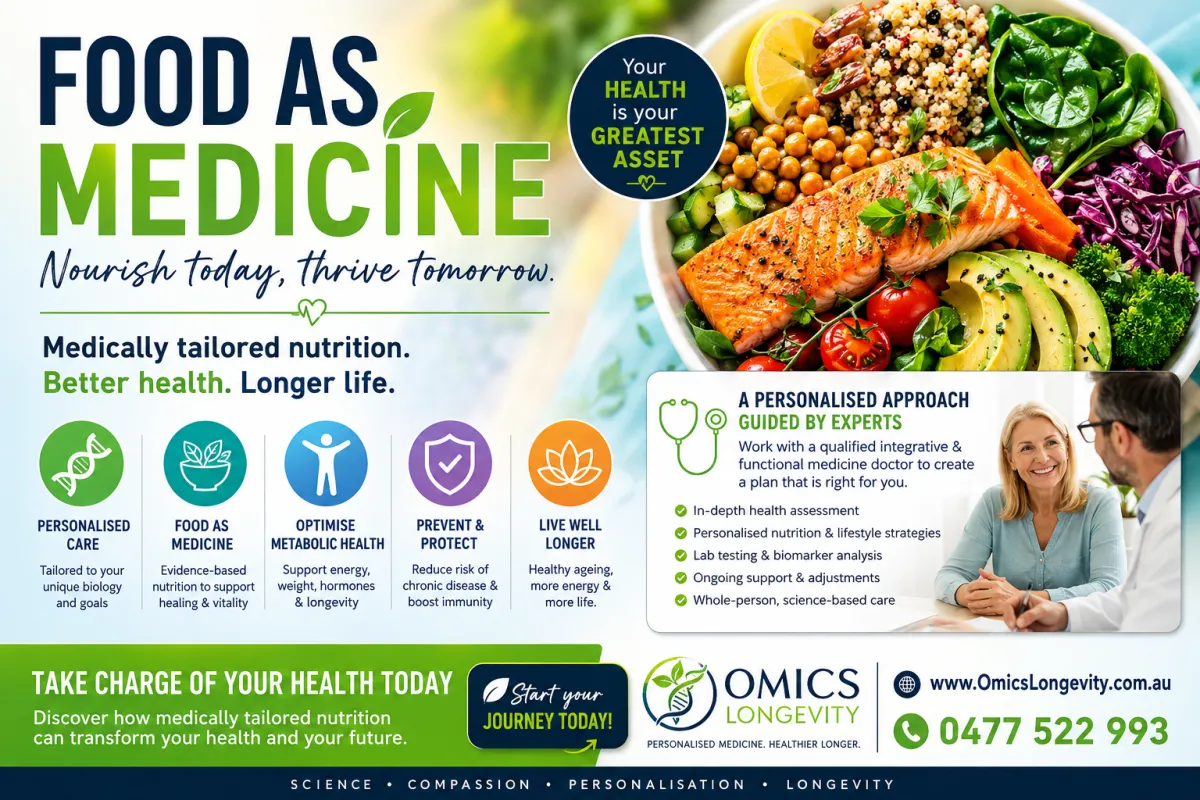
Why Work With a Qualified Integrative and Functional Medicine Doctor?
The internet is full of conflicting dietary advice:
Keto. Vegan. Carnivore. Mediterranean. Low-FODMAP. Intermittent fasting. High-protein. Low-fat. Low-carb.
The question should rarely be:
"Which diet is best?"
A more useful question is:
"Which nutritional strategy is appropriate for this person, at this stage of their health?"
A qualified integrative and functional medicine doctor, working where appropriate with an accredited practising dietitian and other healthcare professionals, can evaluate the wider clinical picture.
This may include:
Medical history
Medications and supplements
Blood glucose and insulin markers
Cholesterol and cardiovascular risk
Kidney and liver function
Nutritional deficiencies
Body composition
Muscle mass
Digestive symptoms
Lifestyle and physical activity
Personal health and longevity goals
The goal is not to prescribe fashionable diets.
It is to develop a nutritional strategy that is personalised, clinically appropriate, measurable and sustainable.
The Future: Your Kitchen May Become Part of Your Healthcare Plan
The future of medicine is unlikely to be a choice between pharmaceuticals and lifestyle medicine.
It will increasingly involve combining the appropriate tools for the appropriate patient.
That may include:
Medical assessment + targeted nutrition + exercise + sleep optimisation + behavioural change + medications when indicated + ongoing biomarker monitoring.
Medically tailored meals represent an important change in thinking.
Instead of nutrition being an afterthought following diagnosis, food can become a structured part of the healthcare conversation.
The evidence is still evolving, and not every Food as Medicine intervention has demonstrated clinical benefits in controlled trials.
But the broader principle is compelling:
The right food, for the right person, at the right time—integrated with appropriate medical care.
Take a Personalised Approach to Nutrition & Longevity
At Omics Longevity, we believe nutrition is one component of a broader personalised approach to metabolic health, healthy ageing and longevity.
Rather than relying on generic dietary advice, an integrative and functional medicine assessment can help determine how nutrition fits alongside your medical history, biomarkers, body composition, lifestyle and individual health goals.
Ready to explore a more personalised approach to your health?
Omics Longevity – Integrative & Functional Medicine
🌐 www.OmicsLongevity.com.au
📞 0477 522 993
Book a consultation to discuss a personalised approach to nutrition, metabolic health and longevity.
Medical disclaimer: This article is provided for general educational purposes only and is not a substitute for individual medical or dietetic advice. Medically tailored nutrition should be personalised to the individual's diagnosis, medications, nutritional requirements and clinical circumstances. Do not stop or change prescribed medications or medical treatment based on dietary information without consulting your treating healthcare professional.