The Top Anti-Ageing Peptides: What the Science Really Shows
Longevity, Anti-Ageing Peptides, Precision Medicine
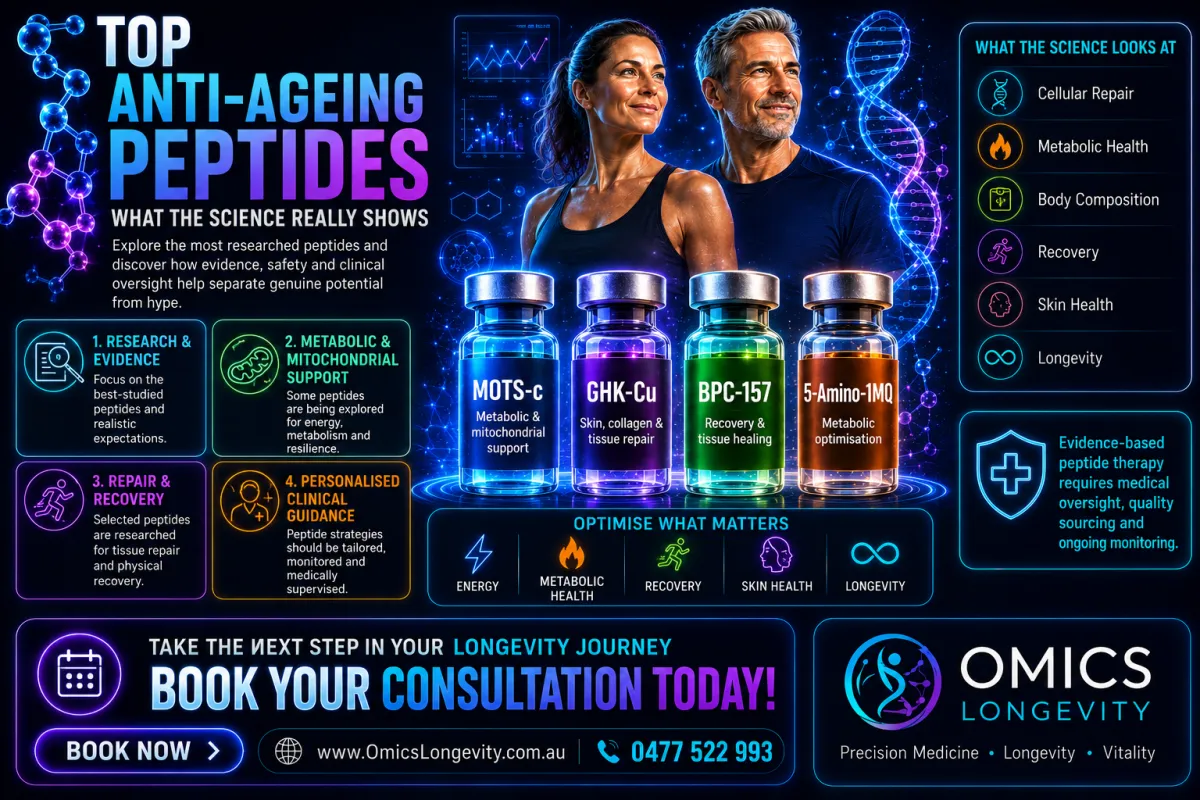
The Top Anti-Ageing Peptides: What the Science Really Shows
Anti-ageing peptides have moved from fringe biohacking forums into mainstream discussion, especially among Australians seeking evidence-based strategies to stay healthier for longer. At Omics Longevity in Brisbane, we use AI-driven insights and clinical oversight to separate genuine scientific promise from hype. This article reviews the most researched anti-ageing peptides and clarifies what current evidence actually supports.
Why Peptides Matter in Longevity Medicine
Peptides are short chains of amino acids that act as signalling molecules throughout the body. They can influence inflammation, tissue repair, collagen production, immune function and even gene expression. In 2026, multiple reviews in journals such as Frontiers in Aging and Food Bioscience highlight peptides as emerging tools targeting several hallmarks of ageing, from mitochondrial dysfunction to extracellular matrix decline and immune senescence.
However, not all “anti-ageing peptides” are created equal. Some, like Thymosin Alpha‑1 and GHK‑Cu, have human data and regulatory history in specific indications. Others, such as BPC‑157 and Epithalon, are still largely experimental with promising mechanisms but limited clinical trials. Understanding this spectrum is essential if you are searching for anti-ageing peptides Brisbane residents can access safely and responsibly.
BPC‑157: Tissue Repair, Gut Healing and Collagen Support
BPC‑157 (Body Protection Compound‑157) is a synthetic fragment derived from a peptide found in human gastric juice. In more than 100 animal and in vitro studies, it has demonstrated potent tissue repair and gut-protective effects. Mechanistically, BPC‑157 appears to:
Activate VEGFR2, promoting angiogenesis and blood vessel growth to injured tissues.
Upregulate eNOS via Akt-linked signalling, improving nitric-oxide–mediated blood flow.
Modulate inflammatory pathways such as NF‑κB, potentially reducing local inflammation.
In animal models, BPC‑157 accelerates healing of tendons, ligaments, muscle, bone and intestinal tissue, and may indirectly support collagen production by improving blood supply and reducing inflammatory damage. These findings underpin the interest in BPC‑157 Australia-wide for sports injuries and gut health.
Yet human data are still extremely limited. A handful of small, uncontrolled case series (for knee pain and interstitial cystitis) and a tiny IV safety study suggest tolerability, but there are no robust randomised controlled trials, no established dosing standards and no long-term safety data. Regulatory agencies in several jurisdictions classify BPC‑157 as a research-only compound, and it is not an approved medicine for anti-ageing. At Omics Longevity, we treat BPC‑157 as experimental and only consider it, where legally appropriate, within carefully controlled, medically supervised contexts, never as a stand-alone “longevity solution”.
GHK‑Cu: Skin Rejuvenation, Collagen and Wound Healing
GHK‑Cu (glycyl‑histidyl‑lysine copper) is a naturally occurring tripeptide that binds copper ions. Levels of this GHK‑Cu peptide decline markedly with age, with estimates of around a 60% reduction from early adulthood to later life. GHK‑Cu has one of the strongest evidence bases among cosmetic and regenerative peptides:
It modulates expression of more than 4,000 human genes, particularly those involved in extracellular matrix (ECM) repair, antioxidant defence and anti-inflammatory signalling.
It delivers copper to key enzymes such as lysyl oxidase (for collagen cross-linking) and superoxide dismutase (for neutralising free radicals).
Preclinical models show enhanced wound healing, reduced inflammatory cytokines (TNF‑α, IL‑1β, IL‑6) and improved tissue regeneration.
Small placebo-controlled human studies of topical GHK‑Cu report improvements in skin thickness, elasticity, wrinkle depth and overall photoageing scores. A 2025 Phase IIb trial cited by independent peptide reviews demonstrated approximately 31% wrinkle reduction with GHK‑Cu formulations. This positions GHK‑Cu as one of the few peptides with both mechanistic depth and clinical data for skin rejuvenation and wound healing.

Objective skin imaging helps quantify collagen and elasticity changes over time.
At Omics Longevity, GHK‑Cu is typically considered for topical protocols targeting photoaged or scarred skin, often alongside lifestyle and nutritional interventions that support collagen synthesis. Systemic or injectable use remains more experimental and must be weighed carefully against regulatory guidance and individual risk profiles.
Epithalon: Telomere Extension and Epigenetic Regulation
Epithalon (also known as Epitalon) is a synthetic tetrapeptide originally derived from the pineal gland. It is often promoted in longevity circles for its potential to activate telomerase and stabilise telomere length, thereby slowing cellular ageing. Preclinical studies and early human data suggest Epithalon may:
Increase telomerase activity in certain cell types, potentially preserving telomere length.
Influence epigenetic regulation of genes involved in stress resistance and circadian rhythm.
Modulate neuroendocrine function in animal models, with possible benefits for sleep and metabolic regulation.
However, the human evidence remains mixed. An Aging Cell trial in 2025 found inconsistent telomere effects, and many of the earlier Russian studies are difficult to interpret by modern standards. Regulatory authorities are now taking a closer look: Epithalon is scheduled for a formal FDA Pharmacy Compounding Advisory Committee hearing in 2026, reflecting increased scrutiny of its safety and efficacy claims for Epithalon longevity applications.
From a clinical perspective, Epithalon is best regarded as a promising but unproven tool for telomere biology. At Omics Longevity, we emphasise that telomere length is only one part of the ageing puzzle; lifestyle interventions, metabolic health and inflammation control often have more robust evidence for extending healthspan than any single peptide.
CJC‑1295: Growth Hormone Support, Body Composition and Recovery
CJC‑1295 is a synthetic analogue of growth hormone–releasing hormone (GHRH). It is designed to stimulate the pituitary gland to release endogenous growth hormone (GH) in a more physiologic, pulsatile manner compared with direct GH injections. In the context of longevity and performance, CJC‑1295 is often discussed for:
Supporting favourable body composition (increased lean mass, reduced visceral fat) when combined with exercise and nutrition.
Enhancing recovery from training or injury by increasing IGF‑1 and protein synthesis.
Potentially improving sleep quality and subjective vitality in GH-deficient individuals.
A 2026 Frontiers in Aging review lists CJC‑1295 among peptides modulating the GH axis with potential relevance to age-related sarcopenia and metabolic decline. Nonetheless, high-quality, long-term trials specifically in older, otherwise healthy adults are still sparse. Excessive GH signalling can carry risks, including insulin resistance, oedema and theoretical cancer promotion, so careful dosing and monitoring are non-negotiable.
Thymosin Alpha‑1: Immune Modulation and Anti-Inflammatory Effects
Thymosin Alpha‑1 (Tα1) stands out as one of the most clinically validated peptides in the longevity space. It is approved in more than 35 countries for immune-related indications, including chronic viral infections and as an adjunct in certain cancers. In ageing, its relevance centres on immunosenescence—the progressive decline in immune function that increases infection risk and chronic inflammation (“inflammageing”).
Tα1 enhances T-cell maturation and function, helping restore more youthful immune profiles in some older cohorts.
It can improve vaccine responses in older adults, an important consideration for respiratory and viral illnesses.
It exerts anti-inflammatory effects by modulating cytokine balance, potentially lowering chronic low-grade inflammation.
Multiple clinical trials and decades of real-world use position Thymosin Alpha‑1 as a Tier 1 peptide for immune restoration in evidence-based rankings. For older Australians, carefully selected Tα1 protocols may support resilience against infections and improve overall immune fitness when integrated into a comprehensive longevity plan.
📌 Mid-Article Call to Action: If you are exploring science-backed options for skin, immune or recovery support, you can review the current peptide-related products and formulations available through Omics Longevity at https://omicslongevity.com.au/products-list. All recommendations are made in the context of your biomarkers, goals and medical history.
How Peptide Therapy Is Medically Supervised at Omics Longevity
As an AI-driven peptide therapy clinic Brisbane clients can trust, Omics Longevity follows a structured, medically supervised pathway for any peptide-based intervention. Our approach includes:
Comprehensive Assessment: We begin with detailed history, physical examination and multi-omic profiling—bloods, genetics where appropriate, microbiome and advanced biomarkers of inflammation, metabolic health and biological age.
AI-Enhanced Protocol Design: Our proprietary AI models integrate your data with the latest peptide research (including regulatory status and evidence tiers) to identify candidates that may complement lifestyle, nutrition and other medical therapies.
Shared Decision-Making: We discuss potential benefits, uncertainties, side effects and legal considerations in plain language, ensuring you understand where each peptide sits on the evidence spectrum—from well-established (e.g., Thymosin Alpha‑1 in specific immune contexts) to experimental (e.g., BPC‑157 for musculoskeletal repair).
Quality-Controlled Sourcing: Where peptides are prescribed, we work only with reputable, compliant compounding pharmacies or regulated products, minimising the contamination and mislabelling risks common in grey-market peptide supply.
Ongoing Monitoring: We track objective markers (e.g., IGF‑1, inflammatory cytokines, skin imaging, body composition scans) and subjective outcomes, adjusting or discontinuing therapy as needed to maintain safety and optimise benefit.

AI-assisted reports help personalise peptide protocols to each patient’s biology.
Crucially, peptide therapy is never offered in isolation. Exercise programming, nutrition optimisation, sleep architecture, stress management and management of underlying medical conditions remain the foundation. Peptides are considered adjunctive tools, not magic bullets.
Where Do Anti-Ageing Peptides Fit in a Realistic Longevity Strategy?
The 2026 research landscape shows a maturing but still evolving field. Reviews from independent groups such as PeptideMark and Peptidepedia consistently rank peptides according to evidence strength:
Strongest evidence: collagen peptides, Thymosin Alpha‑1 and topical GHK‑Cu for specific indications (skin health, immune support).
Moderate evidence: selected GH-axis peptides like CJC‑1295 in defined populations, with careful monitoring.
Emerging but uncertain: Epithalon for telomere biology and BPC‑157 for systemic longevity effects, where human data remain sparse.
For health-conscious Australians, the key is context. If you are considering anti-ageing peptides Brisbane options, questions to ask include:
What is the quality and quantity of human evidence for this peptide?
Is the product sourced through a regulated, quality-controlled channel?
How will my response be monitored, and what are the exit criteria if it is not beneficial?
These are the questions we address systematically at Omics Longevity, leveraging AI but grounded in conservative, evidence-based clinical judgement.
Take the Next Step: Personalised, Science-Backed Peptide Guidance
Anti-ageing peptides represent one of the most exciting—and most misunderstood—frontiers in longevity medicine. BPC‑157, GHK‑Cu, Epithalon, CJC‑1295 and Thymosin Alpha‑1 each target different biological levers, from tissue repair and collagen synthesis to telomere dynamics, growth hormone signalling and immune resilience. Yet the science is nuanced: some peptides have decades of clinical experience, while others remain largely experimental with unknown long-term risks.
If you are serious about extending your healthspan, the most powerful step is not ordering random vials online—it is partnering with a team that can interpret your biomarkers, weigh the evidence and design a coherent strategy. As a leading peptide therapy clinic Brisbane residents can access locally, Omics Longevity combines AI analytics, precision diagnostics and medical expertise to do exactly that.
To explore whether and how peptides might fit into your broader longevity plan, we invite you to schedule a personalised consultation. You can Book a Consultation with our clinical team today at https://omicslongevity.com.au/booking-form. Together, we can use the best available science—not hype—to help you stay stronger, sharper and healthier for longer.