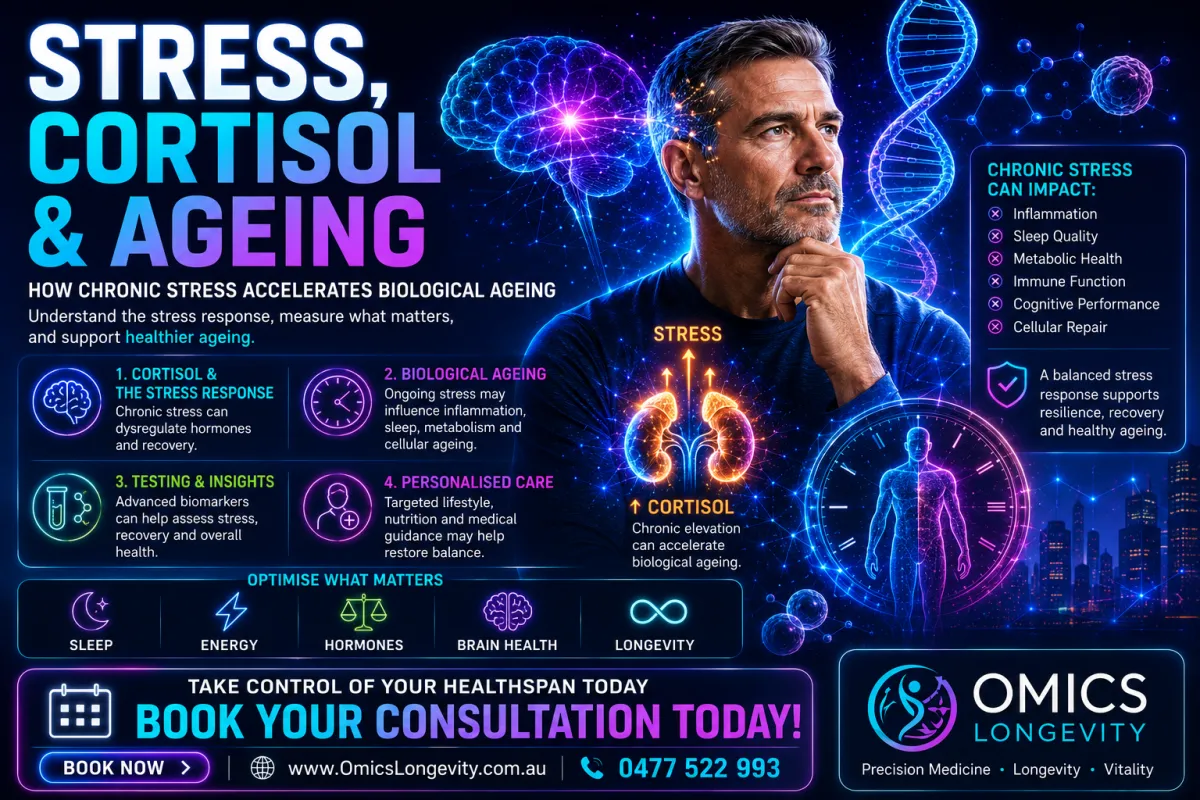
Stress, Cortisol & Ageing: How Chronic Stress Accelerates Biological Ageing
Longevity, Stress Biology, Mind-Body Wellness
Stress, Cortisol & Ageing: How Chronic Stress Accelerates Biological Ageing
Chronic stress is no longer just a feeling of being overwhelmed; it is a measurable biological force that can speed up how quickly your cells, organs and brain age. At Omics Longevity in Brisbane, we combine advanced biomarkers with mind-body therapies to understand how stress is shaping your healthspan – and how to slow that process down.
The HPA Axis: Your Stress Command Centre
When you experience a threat – whether it is a tight deadline, financial pressure, or a health scare – your brain activates the hypothalamic–pituitary–adrenal (HPA) axis. This is the core neuroendocrine system that coordinates the stress response and determines how your body uses cortisol over time.
The process unfolds in three steps:
- The hypothalamus detects stress and releases corticotropin-releasing hormone (CRH).
- CRH signals the pituitary gland to secrete adrenocorticotropic hormone (ACTH) into the bloodstream.
- ACTH stimulates the adrenal glands on top of your kidneys to release cortisol and adrenaline.
In the short term, this “fight-or-flight” response is adaptive. Cortisol mobilises glucose for energy, sharpens focus, and temporarily alters immune and digestive function so you can deal with the challenge at hand. Once the stressor passes, cortisol should fall and the HPA axis should switch off. The problem arises when psychological and lifestyle stressors are relentless, and cortisol stays elevated day after day – a pattern we commonly see in health-conscious Australians seeking help for stress and ageing in Brisbane.
Chronic Cortisol Elevation: How Stress Damages the Body
Telomere Shortening: Stress at the Chromosomal Level
Telomeres are protective caps at the ends of your chromosomes that shorten slightly each time a cell divides. When telomeres become critically short, cells enter senescence or die, contributing to tissue ageing. Multiple studies have linked chronic psychological stress and high cortisol with faster telomere erosion. Caregivers of chronically ill relatives, for example, often display telomere lengths equivalent to someone a decade older than their chronological age. Practically, this means that unrelenting stress can make your cells “older” than your birth certificate suggests, undermining chronic stress longevity goals.
Inflammation: Fuel for Age-Related Disease
While short bursts of cortisol are anti-inflammatory, persistent dysregulation of the HPA axis can lead to a paradoxical state of low-grade, systemic inflammation. This “inflamm-ageing” is a recognised driver of cardiovascular disease, type 2 diabetes, neurodegeneration and frailty. Elevated inflammatory cytokines damage blood vessels, impair insulin signalling and disrupt neuronal integrity, accelerating the onset of age-related conditions even in midlife.
Sleep Disruption and Circadian Misalignment
Cortisol is meant to follow a diurnal rhythm: high in the morning to help you wake, and low at night to allow deep, restorative sleep. Chronic stress flattens or inverts this curve. Many clients report being exhausted during the day yet wired at night, with difficulty falling or staying asleep. Poor sleep then amplifies stress reactivity, creating a vicious cycle. Over time, circadian disruption impairs metabolic health, mood regulation and cognitive performance – all key pillars of healthy longevity.
Immune Impairment and Infection Risk
Chronically elevated cortisol suppresses aspects of immune function, including natural killer cell activity and antibody production. People under prolonged stress are more susceptible to respiratory infections, slower wound healing and reactivation of dormant viruses such as herpes simplex. Over years and decades, this immune wear-and-tear contributes to the ageing of the immune system (immunosenescence), leaving you less resilient to both everyday pathogens and serious disease.
Cardiovascular Risk and Metabolic Strain
Cortisol influences blood pressure, blood sugar and lipid metabolism. Prolonged elevation promotes abdominal fat deposition, insulin resistance, hypertension and adverse cholesterol profiles. These changes substantially raise the risk of heart attack and stroke. From a longevity perspective, unmanaged stress effectively accelerates the cardiovascular ageing clock, even in individuals who otherwise eat well and exercise regularly.

Objective stress testing reveals how cortisol and physiology respond to daily life.
Psychological Stress and Accelerated Epigenetic Ageing
Beyond telomeres, chronic stress leaves a signature on your epigenome – the layer of chemical tags that regulate which genes are turned on or off. Epigenetic “clocks”, built from DNA methylation patterns, can estimate biological age with remarkable precision. Research consistently shows that individuals exposed to long-term psychological stress, trauma or socioeconomic adversity often display an epigenetic age several years older than their chronological age, even after adjusting for lifestyle factors such as smoking and BMI.
This accelerated epigenetic ageing is associated with higher risks of cardiovascular disease, cognitive decline and all-cause mortality. In other words, your perception of stress and your emotional environment are not “just in your head” – they are written into your gene regulation architecture. At Omics Longevity, we utilise advanced biomarker panels to help quantify these effects and guide personalised stress management longevity strategies for our clients.
Measuring Cortisol and Stress Biology in Australia
For many people in Brisbane, a crucial first step is understanding their own stress physiology. Cortisol testing Australia-wide now includes not only standard blood tests, but also salivary and urinary profiles that map your diurnal rhythm across the day. When combined with heart rate variability, inflammatory markers and, where appropriate, epigenetic age analysis, we can build a detailed picture of how stress is shaping your biology and your long-term health trajectory.
Evidence-Based Ways to Slow Stress-Related Ageing
Mindfulness and Breathwork
Mindfulness-based stress reduction (MBSR) and related practices have been shown in clinical trials to reduce perceived stress, improve sleep and, in some studies, slow epigenetic ageing markers. Slow, diaphragmatic breathing and techniques such as box breathing stimulate the parasympathetic nervous system, lowering heart rate and blood pressure and helping recalibrate the HPA axis. Integrating brief breathwork sessions throughout the day can be a powerful, accessible intervention for busy professionals seeking mind body wellness Brisbane solutions.
Adaptogens: Ashwagandha and Rhodiola
Adaptogenic botanicals help the body adapt to stress and support more balanced cortisol dynamics. Ashwagandha (Withania somnifera) has been shown in randomised controlled trials to reduce cortisol and improve stress-related symptoms such as fatigue and poor sleep. Rhodiola rosea has evidence for enhancing resilience, mental performance and mood under stress. While these are not substitutes for lifestyle change, they can be valuable adjuncts within a medically supervised longevity program, particularly when combined with appropriate testing and monitoring.
Sleep as a Core Longevity Practice
Consistent, high-quality sleep is one of the most potent levers for normalising cortisol and protecting brain and cardiovascular health. Evidence-based strategies include a regular sleep–wake schedule, minimising blue light exposure in the evening, moderating caffeine and alcohol, and creating a dark, cool, quiet bedroom environment. For some individuals, targeted nutrients, adaptogens or cognitive behavioural therapy for insomnia (CBT-I) may be indicated as part of a comprehensive plan.
Nature Exposure and Movement
Spending time in nature – even urban green spaces – has been associated with lower cortisol, improved mood and reduced all-cause mortality. Gentle to moderate physical activity, particularly outdoors, further supports metabolic health, brain-derived neurotrophic factor (BDNF) and circadian alignment. For many of our Brisbane clients, structured routines that incorporate walking by the river, ocean swims or bush trails are an integral part of their stress and ageing strategy.

Regular movement in nature powerfully lowers stress hormones and supports longevity.
Social Connection and Emotional Support
Strong, supportive relationships buffer the physiological impact of stress. Loneliness and social isolation, in contrast, are associated with higher cortisol, increased inflammation and shorter lifespan. Investing in meaningful connection – whether through family, community groups, spiritual practice or therapeutic support – is therefore a core component of any serious stress management longevity plan.
Targeted Medical and Integrative Support
For some individuals, particularly those with long-standing anxiety, depression, burnout or trauma, targeted medical support is essential. This may include psychological therapies, pharmacological treatment, hormone optimisation, or structured integrative care pathways. At Omics Longevity, we pair these modalities with biomarker-guided interventions, ensuring that each client’s program is grounded in objective data rather than guesswork.
Omics Longevity: A Holistic Mind–Body–Spirit Approach in Brisbane
At Omics Longevity, our mission is to help you live longer, healthier and more vibrantly – not simply to add years, but to enhance the quality of every year. Our AI-driven precision health platform integrates genomics, epigenetics, advanced bloods, hormone profiles and lifestyle data to build a detailed map of your stress biology and ageing trajectory. We then design personalised, mind body wellness Brisbane programs that address not only cortisol and inflammation, but also emotional wellbeing and spiritual alignment.
These holistic programs may include guided mindfulness and breathwork, adaptogen protocols, nutrition and movement coaching, sleep optimisation, nature-based prescriptions and facilitated connection with supportive communities. By addressing the HPA axis, the epigenome and the nervous system together, we aim to slow the biological processes that drive stress and ageing in Brisbane clients and across Australia.
Take the Next Step: From Overwhelm to Resilient Longevity
If you recognise yourself in this picture – wired but tired, juggling responsibilities, noticing changes in sleep, mood, weight or blood pressure – your body may already be carrying the imprint of chronic stress. The good news is that stress biology is modifiable. Telomere dynamics, inflammatory pathways and even epigenetic age can respond positively to sustained, targeted interventions.
Whether you are seeking comprehensive cortisol testing Australia-wide, exploring adaptogens, or ready to commit to a full mind–body–spirit transformation, Omics Longevity can guide you with evidence-based, data-driven care. Our clinicians and health coaches specialise in translating complex biomarker data into practical daily actions that fit your life and values.
Your future self – with clearer thinking, more stable energy, deeper sleep and a younger biological age – is shaped by the choices you make today. To discover how our AI-driven precision health and holistic stress programs can support your long-term vitality, we invite you to take the first step.
Book a Consultation with Omics Longevity today: visit https://omicslongevity.com.au/booking-form to schedule your personalised assessment and begin reshaping your relationship with stress – and with ageing.