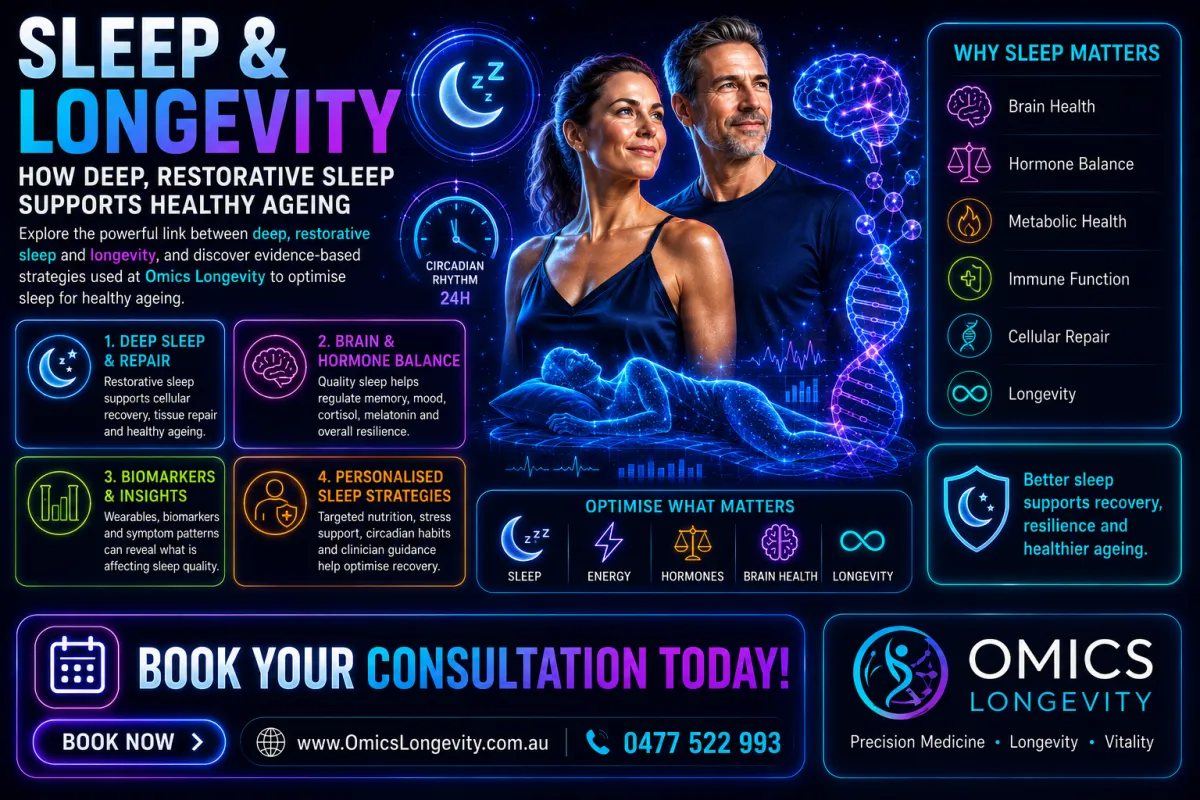
Sleep Optimisation as a Longevity Strategy: The Science Behind Deep Rest
Longevity, Sleep Optimisation, Precision Health
Sleep Optimisation as a Longevity Strategy: The Science Behind Deep Rest
At Omics Longevity in Brisbane, we view sleep not as a luxury, but as one of the most powerful, science-backed levers for extending healthspan. High-quality sleep is a dynamic biological process that recalibrates your brain, hormones, immune system, and even your biological age. Understanding how deep rest works at the cellular level is essential for anyone serious about sleep and longevity, and about building a personalised, AI-informed longevity strategy that fits modern Australian lifestyles.
How Sleep Shapes Biological Age, Not Just How Tired You Feel
Chronological age counts birthdays. Biological age reflects how old your cells, tissues, and systems behave. Emerging research links short or fragmented sleep with accelerated epigenetic ageing, telomere shortening, and chronic inflammation — all core hallmarks of ageing. In contrast, consistently restoring deep and REM sleep appears to support healthier gene expression profiles, more favourable metabolic markers, and improved cardiovascular and cognitive resilience over time.
At Omics Longevity, we integrate sleep metrics with multi-omics data (genomics, metabolomics, microbiome and more) to understand how your sleep patterns are influencing your biological age. For many clients in Brisbane seeking sleep optimisation Brisbane services, improving sleep quality becomes one of the fastest ways to positively shift biological ageing trajectories.
The Architecture of Sleep: What Happens in Each Stage
Healthy adult sleep cycles through non-REM (N1, N2, N3) and REM stages roughly every 90 minutes. Each stage is biologically distinct and contributes differently to sleep and longevity.
N1 (light sleep): Transition from wakefulness. Brain waves slow, muscles relax, and sensory input begins to disconnect. This stage is brief but sets up the descent into deeper stages.
N2 (stable sleep): Heart rate and body temperature fall. Sleep spindles and K-complexes appear on EEG, believed to support memory consolidation and sensory gating, protecting deeper sleep from disruption.
N3 (deep slow-wave sleep): This is the most restorative non-REM stage, characterised by slow delta waves. Here, growth hormone surges, tissue repair accelerates, and the glymphatic system begins actively clearing metabolic waste from the brain.
REM (rapid eye movement) sleep: Brain activity resembles wakefulness, but the body is effectively paralysed. REM underpins emotional processing, learning, creative problem-solving, and fine-tuning of neural circuits.
Cellular Repair and Brain Health: Why Deep and REM Sleep Matter Most
During deep slow-wave sleep (N3), the body prioritises cellular repair. Protein synthesis increases, DNA damage is corrected, and mitochondria — your cellular powerhouses — undergo quality control. Chronic loss of deep sleep has been linked with increased oxidative stress, impaired autophagy, and accumulation of damaged proteins, all of which contribute to sleep and ageing at the cellular level.
In the brain, deep sleep activates the glymphatic system, a fluid-based clearance pathway that removes neurotoxic by-products such as beta-amyloid and tau. Reduced deep sleep is associated with greater amyloid burden and increased risk of cognitive decline and Alzheimer's disease. Meanwhile, REM sleep refines neural connectivity, consolidates procedural and emotional memories, and stabilises mood. Fragmented or curtailed REM is linked with higher rates of depression, anxiety, and impaired learning.
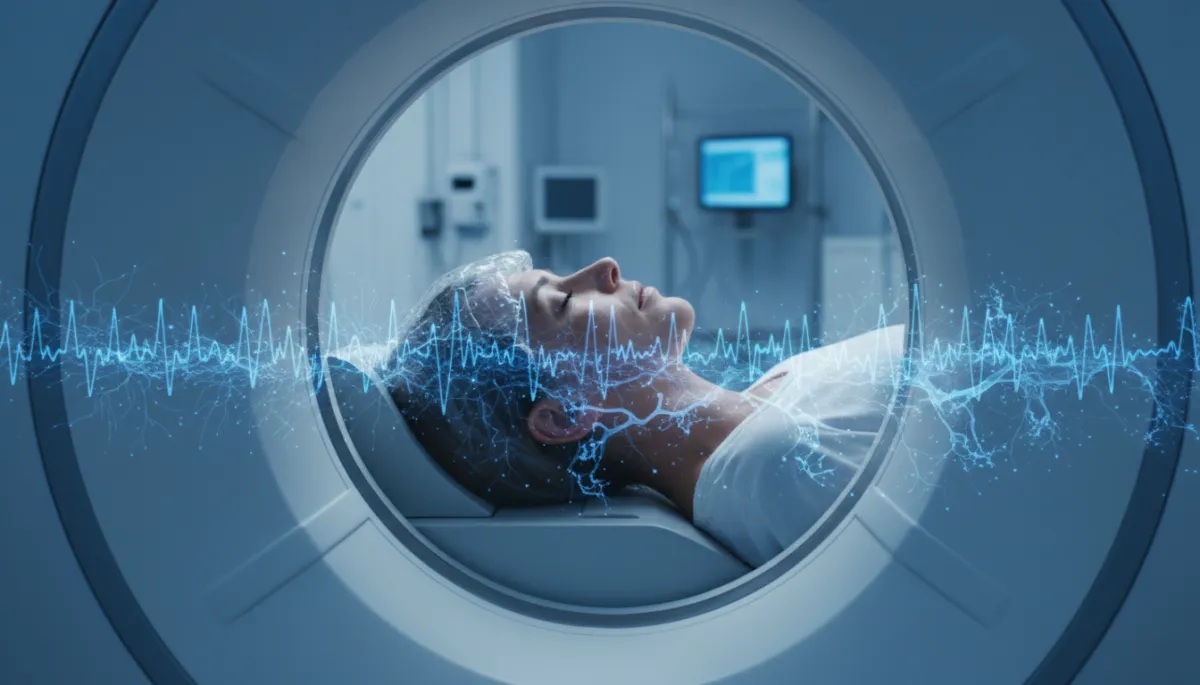
Deep and REM sleep drive brain detoxification and network rewiring critical for healthy ageing.
Hormonal Balance, Metabolism, and Immune Function While You Sleep
Sleep is a master regulator of hormonal and immune homeostasis. At night, a precisely timed cascade of hormones guides repair, appetite, and metabolic control:
Growth hormone peaks during deep sleep, driving tissue regeneration, muscle maintenance, and metabolic health.
Cortisol should be low at night and rise towards morning. Chronic sleep restriction blunts this rhythm, leading to elevated evening cortisol, abdominal fat gain, and impaired glucose control.
Leptin and ghrelin, which regulate satiety and hunger, are tightly linked to sleep duration and quality. Poor sleep increases ghrelin (hunger) and reduces leptin (fullness), predisposing to overeating and weight gain.
The immune system also follows a circadian rhythm. During consolidated night-time sleep, immune cells traffic to lymph nodes, antibodies are produced, and inflammatory pathways are recalibrated. Chronic short sleep is associated with elevated inflammatory markers such as CRP and IL-6, reduced vaccine responsiveness, and higher susceptibility to infections. From a longevity perspective, this chronic low-grade inflammation accelerates vascular damage, insulin resistance, and neurodegeneration.
How Poor Sleep Accelerates Ageing and Disease Risk
Decades of epidemiological and mechanistic research converge on a clear message: chronic sleep disruption is a potent accelerator of biological ageing and chronic disease. Inadequate or poor-quality sleep is linked with:
Cardiovascular disease: Short sleep and obstructive sleep apnoea are associated with hypertension, endothelial dysfunction, arrhythmias, and higher rates of heart attack and stroke. Nocturnal blood pressure should dip; when it does not, vascular wear and tear increases.
Type 2 diabetes and metabolic syndrome: Even a single week of restricted sleep can impair insulin sensitivity. Long-term, this contributes to weight gain, elevated fasting glucose, and full-blown diabetes.
Cognitive decline and dementia: Fragmented sleep, reduced deep and REM sleep, and circadian disruption are all associated with faster cognitive decline, poorer executive function, and increased Alzheimer's risk.
In other words, poor sleep amplifies nearly every major pathway of ageing: oxidative stress, mitochondrial dysfunction, chronic inflammation, metabolic dysregulation, and neural degeneration. For Australians concerned about sleep and ageing, addressing sleep is non-negotiable if the goal is not just a longer life, but a longer life lived in robust health.
📌 Key Takeaway: Sleep is not simply “recovery time”; it is active biological maintenance. When you cut sleep, you are cutting into the very processes that keep you younger for longer.
Evidence-Based Strategies to Improve Sleep Quality in Australia
For clients seeking to improve sleep quality Australia-wide, we focus on practical, evidence-backed interventions that align with your biology and lifestyle.
1. Sleep Hygiene Fundamentals
Maintain a consistent sleep-wake schedule, even on weekends, to stabilise your circadian clock.
Keep your bedroom cool, dark, and quiet; aim for 18–20°C with minimal light intrusion.
Reserve the bed for sleep and intimacy only; avoid working or scrolling in bed to prevent conditioned wakefulness.
2. Circadian Rhythm and Light Exposure
Light is the primary synchroniser of your internal clock. In bright Australian conditions, strategic exposure matters:
Get 10–20 minutes of outdoor daylight within an hour of waking. This anchors your circadian rhythm and supports earlier melatonin onset at night.
Dim indoor lighting 60–90 minutes before bed; minimise blue-rich light from screens, or use blue-light filters and glasses where appropriate.
3. Targeted Supplement Support: Magnesium and Melatonin
Supplements are most effective when layered on top of strong behavioural foundations and personalised to your biology:
Magnesium: Forms such as magnesium glycinate or citrate can support muscle relaxation, reduce nighttime restlessness, and aid parasympathetic (rest-and-digest) activation. Many Australians have suboptimal magnesium intake, making this a useful adjunct in a longevity program.
Melatonin: This hormone signals darkness to the body. Low-dose, short-term melatonin can be useful for circadian realignment (for example, shift work or travel) or age-related declines in endogenous production. It should be used judiciously and ideally under clinical guidance to avoid mistimed dosing.

Thoughtful use of supplements and trackers can fine-tune a personalised sleep optimisation plan.
💡 Explore targeted sleep support: To complement your lifestyle changes, Omics Longevity curates science-backed sleep and wellness products, including magnesium formulations and circadian-supportive options. Discover our current range at https://omicslongevity.com.au/products-list.
Omics Longevity: Integrating Sleep into Holistic Precision Health
Our approach to longevity wellness Brisbane is deeply integrative. Sleep is not treated in isolation but as a central pillar interacting with nutrition, movement, stress physiology, genetics, and environmental exposures. Using AI-driven analytics, we correlate your sleep data (from wearables, questionnaires, and clinical assessments) with biomarkers such as blood glucose, lipids, inflammatory markers, and biological age clocks.
This allows us to design precision health programs that target the specific mechanisms by which your sleep is influencing cardiovascular risk, diabetes susceptibility, cognitive resilience, and overall ageing trajectory. For some clients, this may mean prioritising deep sleep enhancement to support cellular repair; for others, stabilising REM to improve mood, memory, and daytime performance is the key leverage point.
Whether you are just beginning to explore sleep optimisation Brisbane services or are already tracking your sleep in detail, Omics Longevity provides a structured, data-rich framework to transform night-time rest into a core longevity intervention.

Precision sleep insights help link nightly rest to measurable shifts in biological age and healthspan.
Turn Deep Rest into a Deliberate Longevity Strategy
Sleep is one of the rare interventions that is simultaneously free, powerful, and universally accessible — yet often underutilised. When you align your sleep with your biology, you are not just chasing better energy the next day; you are actively modulating your cardiovascular risk, diabetes trajectory, immune resilience, and cognitive future. For anyone serious about sleep and longevity, deep and REM sleep become non-negotiable nightly priorities, not optional extras.
If you are ready to move beyond generic sleep tips and into a personalised, AI-informed strategy that integrates sleep with your broader health profile, Omics Longevity can help. Our clinicians and data scientists work together to translate cutting-edge sleep science into practical protocols tailored to your genetics, biomarkers, and lifestyle here in Brisbane and across Australia.
Make sleep your most reliable anti-ageing ally. To discuss how a precision sleep program can fit into your long-term health plan, Book a Consultation with Omics Longevity today at https://omicslongevity.com.au/booking-form. Your future brain, heart, and cells will thank you for every night of truly restorative rest.