The Role of Protein in Longevity and Healthy Ageing
Longevity, Healthy Ageing, Nutrition, Protein, Muscle Health
The Critical Importance of Adequate Protein in Longevity Medicine
Protein is often treated like just another macronutrient, but in the context of longevity medicine, it stands out as a powerful, and sometimes underrated, driver of healthy ageing. From preserving muscle and independence to protecting metabolic health and resilience, adequate protein intake may be the single most important nutritional habit for extending your healthspan—not just your lifespan.
Protein: The Missing Link in Healthy Ageing
Why muscle and amino acids matter more than you think
Why Protein May Be the Most Important Nutrient for Healthy Ageing
Carbohydrates and fats primarily provide energy. Protein, on the other hand, provides structure and signals. It supplies the amino acids that build and repair tissues, synthesise enzymes and hormones, and support immune function. As we age, these functions become increasingly critical—and increasingly vulnerable to decline if protein intake is inadequate.
Longevity medicine focuses on preserving function for as long as possible. In that framework, protein is uniquely powerful because it directly supports the organ that underpins mobility, metabolism, and resilience: skeletal muscle. While vitamins, minerals, and phytonutrients absolutely matter, none can replace the role of amino acids in maintaining the body’s structural and functional integrity over time.
Research consistently links higher protein intake—within reason and in the context of an overall healthy diet—to better outcomes in older adults: greater muscle mass and strength, lower risk of frailty, improved recovery from illness, and reduced disability. When you zoom out and ask what nutrient most directly determines whether you will walk independently, climb stairs, and get up from a chair at 85, protein rises to the top of the list.
Muscle as a Metabolic, Endocrine, and Longevity Organ
It helps to stop thinking of muscle as merely “biceps and abs” and start recognising it as a vital organ system. Skeletal muscle is the largest site for glucose disposal in the body, a key reservoir of amino acids, and an active endocrine organ that communicates with the brain, liver, bones, and immune system through signalling molecules called myokines.
Metabolic organ: Muscle acts like a sponge for blood sugar, soaking up glucose after meals. More and healthier muscle improves insulin sensitivity and helps prevent or manage type 2 diabetes and metabolic syndrome.
Endocrine organ: Contracting muscles release myokines that influence inflammation, fat metabolism, brain health, and even mood. Regularly challenging your muscles with resistance training and feeding them adequate protein keeps this signalling network robust.
Longevity organ: Muscle mass and strength are strong predictors of survival. Low muscle mass (sarcopenia) and low strength (dynapenia) are associated with higher mortality, more hospitalisations, and greater risk of disability in older adults.
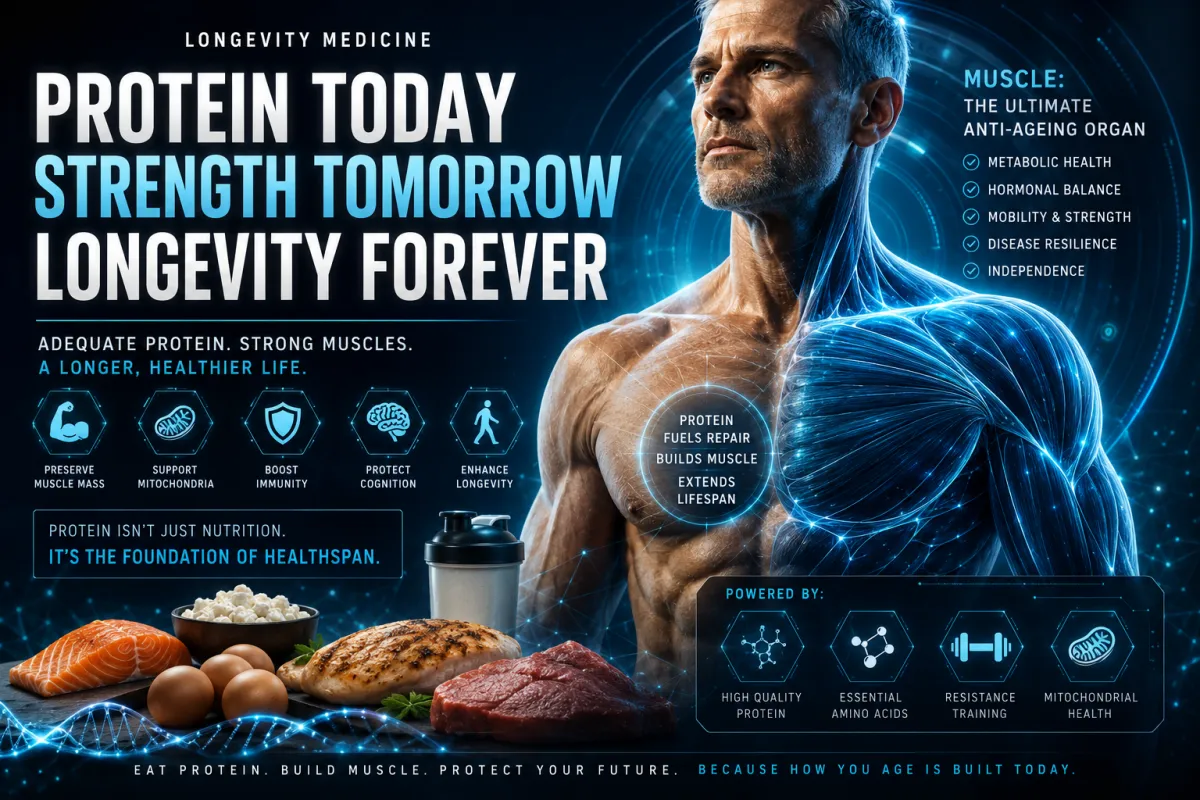
Because muscle is made primarily of protein, you cannot maintain this organ without a sufficient and consistent supply of high-quality amino acids. Protein intake is therefore not just about “gains” in the gym; it is about safeguarding a multi-functional organ that underpins healthy ageing at every level.
Maintaining Muscle Mass: The Foundation of Healthspan and Independence
Healthspan refers to the years of life lived in good health, free from significant disability. Muscle is central to this concept. When people lose muscle, they do not just lose strength; they lose capacity—the ability to move, react, balance, and perform everyday tasks safely and independently. This is why sarcopenia is sometimes called the “root cause” of frailty in older age.
Adequate protein intake, combined with resistance training, slows the age-related decline in muscle mass and strength. This has profound real-world implications:
Fewer falls and fractures because stronger muscles support better balance and reaction time.
Greater ability to recover from illness, surgery, or periods of bed rest, when muscle is rapidly lost if protein is insufficient.
More capacity to engage in physical activity, which in turn supports cardiovascular, cognitive, and emotional health.
Independence in later life often comes down to simple physical tasks: standing up from a low chair, carrying groceries, climbing stairs, or catching yourself if you trip. These are all muscle-dependent. Protein is the raw material that keeps that muscle available when you need it most—in your 70s, 80s, and beyond.

Combining resistance training with adequate protein dramatically improves strength and functional independence with age.
Protein, Muscle, and Age-Related Disease Risk
Muscle is a protective buffer against many of the chronic diseases that shorten healthspan. Because it is metabolically active tissue, having more muscle improves how your body handles blood sugar and fats. This can lower the risk of:
Type 2 diabetes: Muscle is the primary site of insulin-stimulated glucose uptake. More muscle and better muscle quality mean better blood sugar control and less insulin resistance.
Cardiovascular disease: Improved insulin sensitivity, lower inflammation, healthier body composition, and higher physical activity all translate into a lower burden on the heart and blood vessels.
Osteoporosis and fractures: Strong muscles support strong bones by applying mechanical load that signals bone maintenance and growth.
Adequate protein intake also supports immune function, wound healing, and the body’s ability to respond to stressors such as infections or hospitalisations. In older adults, low protein intake is associated with higher rates of complications, longer hospital stays, and poorer recovery. From a longevity perspective, protein is not a luxury—it is a protective factor against the cascade of problems that can follow even a minor health setback in later life.
Anabolic Resistance: Why Older Adults Need More, Not Less, Protein
One of the key concepts in longevity nutrition is anabolic resistance. As we age, our muscles become less responsive to the usual signals that promote growth and repair—particularly dietary protein and resistance exercise. In practical terms, this means that the same protein-rich meal that stimulates robust muscle protein synthesis in a 25-year-old produces a blunted response in a 70-year-old.
Anabolic resistance does not mean older adults cannot build or maintain muscle. It means they need a stronger stimulus: more high-quality protein at each meal and consistent, appropriately challenging resistance training. This is why many experts now recommend that older adults aim for higher protein intakes than the bare minimum recommended dietary allowance (RDA), often in the range of about 1.2–1.6 grams of protein per kilogram of body weight per day, depending on health status and goals, under professional guidance.
💡 Key Point: With ageing, “just enough” protein in youth can become “not nearly enough” in later life. Overcoming anabolic resistance requires both adequate protein and regular muscle use.
The Mitochondrial Connection: Protein, Muscle Quality, and Energy
Healthy ageing is closely tied to healthy mitochondria—the energy-producing structures inside cells. Skeletal muscle is rich in mitochondria, and their function tends to decline with age, contributing to fatigue, reduced endurance, and metabolic dysfunction. Adequate protein intake supports the maintenance and repair of these mitochondria by supplying the amino acids needed to build mitochondrial proteins and enzymes involved in energy production and antioxidant defences.
Resistance training and other forms of exercise stimulate mitochondrial biogenesis (the creation of new mitochondria) and improve mitochondrial efficiency. When paired with sufficient protein, the body is better equipped to remodel muscle tissue, upgrade its mitochondrial machinery, and maintain the energy capacity needed for an active later life. In this way, protein indirectly supports not just muscle size, but muscle quality and overall vitality.
Essential Amino Acids and the Power of Leucine
Not all proteins are created equal. Proteins are made of amino acids, nine of which are considered essential amino acids (EAAs) because the body cannot produce them and must obtain them from food. These EAAs, especially the branched-chain amino acids (leucine, isoleucine, and valine), are critical for stimulating muscle protein synthesis and maintaining lean mass with age.
Among them, leucine plays a starring role. It acts as a key trigger for the cellular pathway (often referred to as mTOR) that initiates muscle protein synthesis. Think of leucine as the “on switch” that tells your body, “We have enough building blocks—let’s repair and build muscle.” For older adults, hitting a leucine “threshold” at each meal is particularly important to overcome anabolic resistance and effectively stimulate muscle maintenance.
High-quality protein sources—such as eggs, dairy, fish, poultry, meat, and certain concentrated plant proteins—tend to be richer in essential amino acids and leucine. For longevity-focused nutrition, the goal is not just total grams of protein, but also quality: ensuring each meal delivers enough EAAs and leucine to meaningfully support muscle health, within the context of individual dietary preferences and medical conditions.
Protein Sources: Animal, Plant, and Practical Choices for Ageing Well
Both animal and plant sources can contribute to adequate protein intake, but they differ in amino acid profile, digestibility, and practicality—especially for older adults who may have reduced appetite or chewing difficulties. In longevity medicine, the priority is to meet protein needs reliably and safely while respecting personal values and health constraints.
Animal-based proteins (such as eggs, Greek yoghurt, cottage cheese, fish, poultry, and lean meats) are typically “complete” proteins, providing all essential amino acids in proportions that closely match human needs. They are also rich in leucine and are highly digestible, which is helpful when appetite is limited.
Plant-based proteins (such as lentils, beans, soya foods, quinoa, nuts, and seeds) can absolutely support healthy ageing, but may require more thoughtful combination and slightly higher total intake to match the EAA and leucine content of animal proteins. Fortified plant-based protein powders or blends (e.g., soya, pea, or mixed plant proteins) can be useful tools, especially for those following vegetarian or vegan diets.
For many older adults, simple, easy-to-prepare options make a big difference: a daily serving of Greek yoghurt, a protein-rich smoothie, scrambled eggs, a portion of fish, or a lentil soup paired with whole grains. The specifics can be tailored, but the overarching goal remains the same—ensure that each day includes enough high-quality protein to protect muscle and function.
Protein Timing: Why Distribution Across the Day Matters
Total daily protein is important, but how you distribute it across meals also influences muscle health. Many people eat a small, low-protein breakfast, a moderate lunch, and a protein-heavy dinner. For older adults facing anabolic resistance, this pattern is suboptimal because it may fail to reach the leucine and EAA threshold needed to stimulate muscle protein synthesis at each eating occasion.
Longevity-focused strategies emphasise a more even distribution of protein intake: aiming for a meaningful dose of high-quality protein at breakfast, lunch, and dinner. While individual needs vary, many experts suggest that older adults may benefit from roughly 25–35 grams of high-quality protein per main meal, adjusted for body size and medical guidance. This pattern provides multiple daily “signals” to muscles that it is time to maintain and repair, rather than leaving long gaps with minimal stimulation.
Resistance Training: The Essential Partner to Protein
Protein alone cannot fully protect muscle without a reason for the body to keep that muscle. That “reason” is mechanical tension—in other words, resistance training. When you challenge muscles against resistance (weights, bands, body weight, or machines), you create micro-damage and stress that signals the body to repair and strengthen those fibres. Protein then provides the building blocks to carry out that repair and adaptation.
For longevity, resistance training does not need to be extreme. Two to three sessions per week that target major muscle groups—using exercises such as squats, rows, presses, and carries—can significantly improve strength, balance, and function. When paired with adequate protein intake, this approach becomes a powerful intervention to counteract sarcopenia, maintain independence, and extend healthspan. Importantly, resistance programmes should be tailored to individual abilities and medical conditions, ideally under professional supervision, especially for beginners or those with chronic disease.
📌 Key Takeaway: Think of resistance training and protein as a package deal for longevity. Exercise tells your body where to build; protein supplies what to build with.
The Controversy Around Protein Restriction and Longevity
Some longevity discussions highlight potential benefits of protein restriction or lower intake of certain amino acids, based largely on animal studies where reduced protein or specific amino acid restriction can extend lifespan. These findings have sparked debate about whether humans should eat less protein to live longer, often by pointing to pathways like mTOR that are involved in both growth and ageing processes.
However, translating these findings directly to humans—especially older adults—can be risky. In people, low protein intake is consistently associated with loss of muscle mass, frailty, and higher risk of disability and mortality. While chronic overnutrition and excess body weight are genuine concerns, undernutrition in older age is just as dangerous, if not more so, for healthspan and independence. A strategy that might theoretically extend life but leaves someone weak, dependent, and vulnerable is not aligned with the goals of practical longevity medicine.
A more nuanced view is emerging: rather than indiscriminately restricting protein, it may be more effective to time and balance protein intake within an overall healthy dietary pattern, maintain a healthy body weight, and prioritise muscle-preserving behaviours. For most older adults, the immediate, evidence-backed benefits of adequate protein for strength, function, and resilience outweigh theoretical concerns about modestly higher protein intakes when guided by healthcare professionals, especially in the absence of kidney disease or other specific contraindications.
Signs You May Not Be Getting Enough Protein
Because inadequate protein intake develops gradually, its signs are often subtle and easy to dismiss as “just getting older.” Paying attention to these clues is an important part of proactive longevity care. Possible signs of low protein intake include:
Gradual loss of strength—struggling more to open jars, lift groceries, or stand from low chairs.
Decreasing muscle mass or a “softer” body composition, even if body weight is stable.
Slower wound healing or more frequent infections, as the immune system relies on adequate amino acids.
Thinning hair, brittle nails, or skin that bruises more easily, all of which can reflect insufficient structural proteins.
Feeling unusually fatigued or weak, especially when combined with low appetite or unintentional weight loss.
These signs are not specific to protein deficiency alone, but they are red flags that warrant a closer look at overall nutrition, including protein intake. A registered dietitian or healthcare provider can help assess dietary patterns and identify gaps that may be undermining muscle and longevity goals.
Strategies for Optimal Protein Consumption to Support Healthy Ageing
Turning the science into daily habits is where longevity medicine becomes real. While individual needs vary and medical guidance is essential, several broad strategies can help most adults, especially those over 50, move toward more optimal protein intake for healthy ageing:
Prioritise protein at every meal. Instead of letting protein be an afterthought, plan meals around a high-quality protein source—such as eggs, yoghurt, tofu, fish, poultry, beans, or a protein-rich soup—and build the rest of the plate with colourful vegetables, fruits, and healthy fats.
Boost protein at breakfast. Many people start the day with mostly carbohydrates. Swapping toast and jam for Greek yoghurt with nuts, an omelette with vegetables, or a protein smoothie can significantly improve overall protein distribution and support muscle maintenance from the first meal of the day.
Choose higher-quality protein sources. When possible, incorporate foods rich in essential amino acids and leucine, such as dairy, eggs, fish, poultry, lean meats, soya, or well-formulated plant protein blends. For those with lower appetites, concentrated sources like Greek yoghurt, cottage cheese, or protein shakes can be especially helpful.
Combine plant proteins wisely. If you follow a plant-based diet, pair complementary proteins (such as beans with grains, or lentils with seeds) and consider including soya or fortified plant protein powders to ensure sufficient essential amino acid intake, especially leucine, at each meal.
Align protein with resistance training. Aim to consume a protein-rich meal or snack in the hours after resistance exercise, when muscles are particularly responsive to amino acids. This pairing helps maximise the benefits of both training and nutrition for muscle maintenance and growth.
Monitor appetite and adjust texture. Ageing can bring changes in taste, digestion, and chewing ability. Soft, easy-to-eat protein options—like smoothies, soups with blended legumes, scrambled eggs, or dairy alternatives—can make it easier to meet protein needs without discomfort or excessive effort.
Work with professionals. Those with kidney disease, liver conditions, or other complex health issues should never dramatically change protein intake without medical guidance. A clinician or dietitian can help tailor protein targets to your health status, medications, and overall goals.
Bringing It All Together: Protein as a Longevity Lever You Can Control
Ageing is inevitable, but the rate and quality of that process are profoundly influenced by daily choices. Adequate, thoughtfully distributed protein intake—paired with regular resistance training—is one of the most powerful, accessible levers we have to protect muscle, preserve independence, and reduce the burden of age-related disease. Far from being a niche concern for athletes, protein becomes increasingly important with every decade of life.
When you recognise muscle as a metabolic, endocrine, and longevity organ, protein stops being just a number on a nutrition label and becomes a strategic tool for healthy ageing. By respecting the realities of anabolic resistance, supporting mitochondrial health, prioritising essential amino acids like leucine, and choosing protein sources and timing that fit your lifestyle, you give your body what it needs to stay strong and capable for as long as possible.
Ultimately, longevity medicine is about more than adding years to life; it is about adding life to years. Ensuring you consume enough high-quality protein, day after day, is a practical, evidence-informed step toward that goal—one plate, one meal, and one muscle-preserving choice at a time.